Table of Contents
- 1. Why the Right Machine Matters More Than the Price
- 2. Types of Line Boring Machines Available in India
- 3. The 7 Specs That Actually Matter
- 4. Do You Need Welding Capability?
- 5. Price Ranges in India — What You Get at Each Level
- 6. The Pre-Purchase Checklist
- 7. Field Case Study
- 8. Which Machine for Which Operation?
- 9. Persona 1 — The Workshop Owner
- 10. Persona 2 — The Fleet Operator
- 11. Persona 3 — The Mining Contractor
- 12. Summary — Which Machine for Which Buyer
- 13. Frequently Asked Questions
1. Why the Right Machine Matters More Than the Price
The Indian heavy equipment market operates on tight margins and tighter deadlines. An excavator sitting idle on a highway project costs anywhere from ₹15,000 to ₹40,000 per day. A mining truck off-hire costs more. In this environment, the decision to invest in a portable line boring machine is rarely about whether — it's about which one.
The problem is that the market is flooded with machines at wildly different price points and wildly different capability levels. A basic boring-only machine can be found for under ₹1,00,000. A fully capable combined boring and welding machine with numerical control costs ₹3,25,000 to ₹5,75,000. The difference is not just price — it is the difference between a machine that does half the job and one that does the complete job.
Buying the wrong machine means one of two outcomes: you spend less upfront but discover the machine can't handle the repairs you actually need, or you spend more than necessary for capabilities your operation doesn't require. This guide is designed to get you to the right answer the first time.
I am Prakhar Bhardwaj, Founder of Bore On Site (BOS). We have been building and selling portable line boring machines in India since the brand was founded, and we have seen every variation of this buying decision across contractors, fleet operators, workshops, and mining companies. What follows is the honest version of what you need to know.
2. Types of Line Boring Machines Available in India
Before comparing specs, understand what categories exist in the Indian market.
Boring-Only Machines (Manual)
These machines perform mechanical boring only — they rotate a boring bar through a bore and cut material to restore roundness and diameter. They do not weld. Price range: ₹1,50,000 to ₹2,00,000. These are suitable only when bores are slightly worn and still within rebuildable tolerance without material build-up. In practice, most worn bores on heavy equipment need welding before boring — making boring-only machines a partial solution for most fleet operators.
Combined Boring and Welding Machines (Standard Control)
These perform both automatic bore welding and line boring in a single setup. The operator sets parameters manually and controls the weld cycle. This is the most practical category for field operators and workshop owners doing standard excavator and loader repairs. Price range: ₹3,25,000 to ₹4,50,000 in India. The BOS DS50 sits in this category.
Combined Boring and Welding Machines (Numerical Control)
These add a digital numerical control interface that allows welding parameters to be programmed as numbers. This enables advanced welding modes — jump welding and sector welding — that standard control machines cannot replicate. Price range: ₹5,00,000 to ₹6,50,000. The BOS DS60 is in this category. Suited to fleet operators, mining operations, and high-volume service workshops.
Stationary Workshop Line Boring Machines
Large fixed machines for dedicated machine shops. Not portable. Not covered in this guide — if you need a stationary machine, the buying criteria are entirely different.
| Category | Price Range (India) | Welding | Best For |
|---|---|---|---|
| Boring-only (manual) | ₹1,50,000 – ₹2,00,000 | ❌ None | Light workshop, partial wear |
| Combined — standard control | ₹3,25,000 – ₹4,50,000 | ✅ Inner bore | Field repair, standard equipment |
| Combined — numerical control | ₹5,00,000 – ₹6,50,000 | ✅ All modes | Fleet, mining, marine |
| Stationary workshop | ₹8,00,000+ | Separate | Dedicated machine shops |
Sources: IndiaMART, TradeIndia, PR Crane & Earthmovers listings (2026)
3. The 7 Specs That Actually Matter
Manufacturers list many specifications. Most of them are noise. Here are the seven that will actually determine whether the machine fits your work.
1. Bore Range (mm)
This is the range of bore diameters the machine can handle. Standard excavator bucket pins run between 60mm and 130mm. Crane boom pins between 80mm and 180mm. Mining equipment can exceed 300mm. Know the bores you will actually repair before selecting a machine. A machine with a 55–160mm range covers 80% of standard construction equipment repair. One with 65–600mm covers everything including large mining and marine applications.
2. Boring Bar Diameter and Material
The boring bar is the spine of the machine — everything rotates around it. A 50mm bar handles standard bores. A 60mm bar provides significantly more rigidity for larger bores and longer extensions. Bar material matters equally: 40Cr and 42CrMo chrome-moly alloy steel maintains straightness under heat and mechanical stress. Cheaper carbon steel bars deflect and produce out-of-round bores. Never buy a machine without confirming bar material specification.
3. Motor Power (KW)
A 3.1KW motor is standard for machines covering up to 160mm. For bores above 200mm, or for continuous operation in mining environments, a 3.8KW motor provides the torque needed to maintain consistent cut without stalling. Underpowered machines produce chatter and poor surface finish on large-diameter bores.
4. Maximum Boring Stroke
This determines the maximum depth of bore the machine can reach in a single setup. A 300mm stroke covers most equipment pins. For crane booms or long-bore industrial applications, you may need extension setups. Confirm this matches your longest anticipated bore depth.
5. Surface Finish Achievable (Ra)
Ra 3.2 micrometres is the industry standard for pin bore repairs — it provides sufficient surface texture for bearing seating and lubrication retention. Any machine claiming Ra values significantly better than 3.2 is either marketing or only achievable under ideal lab conditions. Any machine producing consistently worse than Ra 3.2 is producing substandard bore finishes.
6. Spindle Speed Range (RPM)
A range of 50–300 RPM covers the full spectrum of bore diameters — slower for large bores, faster for small. A machine with a narrow RPM range requires manual gear changes or cannot optimise cut quality across different bore sizes. Variable speed control is the correct specification.
7. Power Supply Compatibility
Site power in India is predominantly 380V three-phase on larger projects, and 220V single-phase on smaller sites and using generators. A machine that supports both voltages at both 50Hz and 60Hz is usable on every Indian site and is exportable to Middle East markets (which run 60Hz). Single-voltage machines limit where you can work.
4. Do You Need Welding Capability?
For most heavy equipment bore repair — yes, absolutely. Here is why.
A worn bore is not just slightly out of round. In most cases, the bore has lost 2mm to 8mm of material on the loaded face. You cannot bore a worn bore smaller to fix it — the pin is fixed size, the bore must be restored to the original diameter. This requires first depositing weld metal to build the bore back up, then boring to precise dimension.
A machine that only bores is therefore incomplete for most real-world repairs. You would need a separate welding setup — which means a second piece of equipment, a second setup procedure, repositioning the component, and accepting the alignment error that comes from two separate setups instead of one integrated operation.
A combined boring and welding machine builds up the bore and bores it back to specification in a single clamped setup. This is faster, more accurate, and produces better bore geometry than a two-machine approach.
Standard Welding vs Advanced Welding Modes
Standard inner circle welding deposits material uniformly around the full bore circumference. This is correct for uniform wear — which describes the majority of excavator bucket pin and arm pin repairs.
However, many bore wear patterns are not uniform. Crane boom pins wear asymmetrically — the loaded face wears while the relief face remains near-new. Mining equipment bores wear in sectors corresponding to the dominant load direction. For these wear patterns, depositing a full circumference of weld is wasteful — it adds unnecessary heat, unnecessary material, and unnecessary post-weld machining time.
This is where advanced welding modes — jump welding and sector welding — provide measurable value. Jump welding skips programmed segments (protecting grease holes and partial wear zones). Sector welding deposits only on the worn arc. For more detail, read our DS50 vs DS60 comparison which covers these modes in depth.
5. Price Ranges in India — What You Get at Each Level
The Indian market for portable line boring machines spans a wide range. Here is an honest breakdown of what you actually get at each price point, based on current market listings and real product specifications.
| Price Range | What's Included | What's Missing | Suitable For |
|---|---|---|---|
| ₹85,000 – ₹1,50,000 | Basic boring only, manual feed, limited bore range | No welding, limited bar material specs, narrow bore range | Light automotive workshop, engine block boring |
| ₹1,50,000 – ₹3,00,000 | Basic boring + some include manual welding | Inconsistent build quality, limited after-sales, narrow bore range | Small repair workshops, occasional use |
| ₹3,25,000 – ₹4,50,000 | Full boring + auto welding, 40Cr/42CrMo bar, variable speed, dual voltage | Standard welding modes only | Field operators, construction equipment repair |
| ₹5,00,000 – ₹6,50,000 | Everything above + numerical control, jump + sector welding, higher motor power | Higher investment required | Fleet operators, mining, marine, high-volume workshops |
The ₹3,25,000–₹6,50,000 range represents the serious portable line boring market in India. Below this, you are buying machines that are either boring-only or built to specifications that will not hold up under regular heavy equipment repair use.
A key point on total cost of ownership: a ₹1,50,000 machine that fails after 18 months of regular use, or produces bores that require rework, does not save money against a ₹3,25,000 machine that lasts 10+ years and produces correct bores the first time. In this product category, the purchase price is less than half the story.
6. The Pre-Purchase Checklist
Before committing to any machine, run through this checklist. Every point should have a confirmed answer from the manufacturer before purchase.
7. Field Case Study
From Boring-Only to Full Repair Capability
A workshop operator in Gujarat had been running a boring-only machine purchased at approximately ₹1,20,000. The machine could restore bore roundness on lightly worn components, but for any bore with significant material loss — the majority of the jobs coming in from local excavator contractors — he was turning work away or sending it to a larger workshop 60 kilometres away and losing the margin.
After upgrading to a combined boring and welding machine, the workshop was able to handle the full repair scope in-house. Within six months, revenue from bore repair had increased significantly — primarily because he was now accepting jobs he had previously declined. The machine paid for itself within the first operating year.
The key lesson from his experience: the boring-only machine was not cheaper in the long run. It was cheaper to buy but more expensive to operate, because it limited the revenue the workshop could generate.
Identifiable details withheld at client's request.
8. Which Machine for Which Operation?
Here is the direct answer based on operation type:
- → Independent field operators and small workshops
- → Standard excavator, backhoe loader, and forklift bore repair
- → Bore range 55–160mm (up to 300mm with extension)
- → Budget-conscious first purchase, entry into on-site repair
- → Under 40 jobs per month
- → Fleet operators managing 10+ heavy machines
- → Mining equipment, large excavators, cranes
- → Bore range 65–600mm for large-bore applications
- → Asymmetric wear patterns requiring sector welding
- → High-volume operations needing consistent output
If you are starting out and unsure, start with the DS50. It is a complete, capable machine for the vast majority of construction and earthmoving equipment repair. As your client base grows and job complexity increases, the DS60 is the natural upgrade — and BOS supports this upgrade path with trade-in discussions.
For full specifications of both machines, visit the BOS DS50 product page and the BOS DS60 product page. For a detailed technical comparison, read our DS50 vs DS60 comparison guide.
Talk to our team before you buy. We will match the right BOS machine to your bore range, fleet size, and repair volume — at no charge.
For pricing and full availability details, see our dedicated guide to line boring machines in India — DS50 from Rs. 3.25 lakh, DS60 from Rs. 5.75 lakh, with pan-India delivery.
9. Persona 1 — The Workshop Owner: Starting or Expanding a Bore Repair Business
An individual operator, small workshop owner, or entrepreneur who wants to offer portable bore repair as a service to contractors, fleet operators, and equipment owners in their region. This buyer is starting a business — revenue generation and payback period are the primary metrics.
The Right Machine: BOS DS50
The DS50 at Rs. 3,25,000 is the right starting machine for a new bore repair service operator for three reasons. First, it covers 55–160mm bore range — which handles 80% of construction equipment repair jobs in India, including all standard excavators up to approximately 30T, backhoe loaders, forklifts, and smaller cranes. Second, the lower entry price means the payback period is shorter — the machine pays for itself in fewer jobs. Third, operating a DS50 is the fastest way to build the operator experience and customer base needed before upgrading to a DS60.
Revenue Model for a Workshop Owner
| Service Type | Jobs per Month (realistic) | Fee per Job | Monthly Revenue |
|---|---|---|---|
| Standard excavator bucket pin bore (60–110mm) | 8 – 12 | Rs. 8,000 – Rs. 12,000 | Rs. 64,000 – Rs. 1,44,000 |
| Large excavator bore (110–160mm) | 3 – 5 | Rs. 12,000 – Rs. 18,000 | Rs. 36,000 – Rs. 90,000 |
| Backhoe loader and loader bores | 4 – 6 | Rs. 6,000 – Rs. 10,000 | Rs. 24,000 – Rs. 60,000 |
| Total (DS50 operator, active market) | 15 – 23 jobs/month | Blended avg. Rs. 10,000 | Rs. 1,50,000 – Rs. 2,30,000/month |
Realistic estimates for an active DS50 operator in a target-rich region. Actual revenue depends on market density, competition, and operator experience.
Payback calculation: At Rs. 10,000 average service fee and 15 jobs per month, monthly revenue is Rs. 1,50,000. Subtract consumables (Rs. 15,000/month) and transport (Rs. 10,000/month) = net Rs. 1,25,000/month. Machine cost Rs. 3,25,000 divided by Rs. 1,25,000/month = 2.6 months to full payback. In a target-rich region — near a construction corridor, a mining district, or an industrial cluster — this payback period is realistic within the first operating quarter.
DS50 limitation for workshop owners: bores above 160mm are outside standard range. If your region has significant mining or large crane activity, the DS60 becomes the better first machine despite the higher cost — because the fee per job is also significantly higher (Rs. 20,000–50,000 for large mining bores vs Rs. 8,000–12,000 for standard excavator bores).
10. Persona 2 — The Fleet Operator: 10+ Machines, In-House Repair Decision
A contractor or fleet manager operating 10 or more heavy machines — excavators, backhoe loaders, cranes, dump trucks — who currently outsources bore repair to a service operator or workshop, and is evaluating whether to bring the capability in-house.
The Right Machine: DS50 or DS60 Depending on Fleet Composition
For a pure construction fleet (standard excavators, backhoe loaders, cranes up to 20T), the DS50 covers the bore range. For a fleet that includes large excavators above 30T, heavy cranes, or any equipment with bores above 160mm, the DS60 is necessary. For mixed fleets, the DS60 is the better single investment — it covers everything the DS50 does and more.
The In-House vs Outsource Calculation
Scenario: Fleet: 15 excavators (mixed 20T–40T class). Annual bore repairs: 2 per machine = 30 per year.
| Scenario | Year 1 Cost | Year 2+ Annual Cost | 5-Year Total |
|---|---|---|---|
| Outsource to on-site service (Rs. 15,000/bore × 30) | Rs. 4,50,000 | Rs. 4,50,000/year | Rs. 22,50,000 |
| Buy DS60 — in-house repair (consumables Rs. 1,500/bore × 30) | Rs. 5,75,000 + Rs. 45,000 = Rs. 6,20,000 | Rs. 45,000/year only | Rs. 7,80,000 |
| Saving vs outsource (DS60 in-house) | Rs. 4,05,000 net saving yr 1 (machine not paid off) | Rs. 4,05,000/year saving | Rs. 14,70,000 saved |
Production loss excluded from above to simplify. Including production loss from 30 repairs/year — the in-house saving is significantly larger. Outsource fee: Rs. 15,000/bore. Consumable estimate: Rs. 1,500/bore.
The break-even for the DS60 in this scenario is approximately 16 months — less than a year and a half. From month 17 onwards, the fleet operator saves Rs. 4,05,000 every year by having the capability in-house. Over a 5-year machine life (conservative — BOS machines are built to run significantly longer), the total saving versus outsourcing is Rs. 14 lakh or more.
What fleet operators should know before buying: The operator training question is critical. Unlike a workshop owner who runs the machine full-time and builds skill quickly, a fleet maintenance team may use the bore repair machine irregularly — 2–3 times per month. Irregular operators need better training to maintain quality between uses. Confirm that BOS provides adequate training and that a reference guide or operation card can be posted near the machine for operators who use it infrequently.
Also consider storage and maintenance between uses. A portable line boring machine kept clean, with the boring bar oiled and stored horizontally, and cutting inserts stored in a dry environment, will last decades. The physical infrastructure for machine storage is part of the true ownership cost.
11. Persona 3 — The Mining Contractor: Large Bore, High Frequency, Zero Compromise
A mining contractor, large quarry operator, or mining company maintenance team managing heavy mining excavators (30T–120T+), rope shovels, jaw crushers, or draglines in coal, iron ore, chromite, or limestone operations. Bore repair frequency is high (every 3–5 months per machine) and bore diameters regularly exceed 200mm.
The Only Machine: BOS DS60
There is no DS50 vs DS60 decision for mining contractors. The DS60 is the only appropriate machine for mining operations. Here is why, point by point.
| Requirement | DS50 (55–160mm) | DS60 (65–600mm) | Mining Reality |
|---|---|---|---|
| Bore diameter coverage | Covers standard excavator up to 30T | Covers entire mining fleet including rope shovels | Large mining excavators (Komatsu PC800, CAT 390) have bucket bores of 150–300mm — DS50 cannot cover these |
| Welding modes | Inner circle only | Inner circle + sector + jump | Mining equipment develops asymmetric wear from consistent bench loading — sector welding is essential, not optional |
| Motor power | 3.1KW | 3.8KW servo | Large bore welding on 200–400mm mining equipment bores requires full torque without stalling |
| Consistency across operators | Manual parameter setting | Numerical control — programmed parameters | Mining maintenance teams change shifts — NC parameters ensure consistent repair quality regardless of operator |
| Repair interval support | Adequate for low-frequency construction work | Designed for high-frequency mining operations | Mining bores need repair every 3–5 months per machine |
Mining ROI — The Numbers Are Compelling
A large iron ore mining excavator (Komatsu PC800 class) generates approximately Rs. 80,000 to Rs. 1,20,000 in production value per operating day. Workshop route for a 200mm eccentric bore: 7–10 days downtime including transport from a remote Odisha or Jharkhand mine site. Total cost including production loss: Rs. 5,60,000 to Rs. 12,00,000 per repair event.
BOS DS60 on-site: 8–12 hours downtime for a 200mm mining bore repair. Total cost including service fee and production loss: Rs. 1,00,000 to Rs. 1,80,000 per repair event. Saving per repair: Rs. 4,60,000 to Rs. 10,20,000.
For a mining fleet doing 40 bore repairs per year (10 machines, 4 repairs each), the DS60 at Rs. 5,75,000 pays for itself within the first single repair on a large mining excavator. The machine is free within one job. Every subsequent repair is pure saving.
What mining contractors should know before buying: Power supply at remote mine sites is the primary operational question. Most open-cast Indian mines run 380V three-phase from diesel generators or grid connection. The DS60 supports both 220V and 380V at 50Hz and 60Hz — confirm the specific power supply available at your most remote operating sites before purchase.
For mining contractors operating across multiple sites in different states, consider purchasing two DS60 machines — one based in each major operational area. The cost of two machines (Rs. 11,50,000) is recovered within two or three emergency repair events that would otherwise have required workshop-route repair on large mining equipment.
Also important: the bore wear rate in abrasive iron ore or coal conditions is 3–5 times faster than standard construction. Budget for consumable wire and inserts at 2–3 times the rate you would use in construction equipment repair. An annual consumable budget of Rs. 1,50,000 to Rs. 2,50,000 for a mining-intensive DS60 is realistic.
12. Summary — Which Machine for Which Buyer
| Buyer Type | Recommended Machine | Price | Payback Period | Key Reason |
|---|---|---|---|---|
| Workshop owner — starting bore repair business | BOS DS50 | Rs. 3,25,000 | 2–4 months | Lowest entry cost, fastest payback, covers 80% of construction equipment market |
| Workshop owner — high-value region (mining/crane) | BOS DS60 | Rs. 5,75,000 | 3–5 months | Higher fee per job justifies higher investment; sector welding opens premium repair market |
| Fleet operator — standard construction fleet (10–20 machines) | BOS DS50 or DS60 | Rs. 3.25L – Rs. 5.75L | 12–18 months | In-house capability eliminates service fees; DS60 if any large equipment in fleet |
| Fleet operator — mixed or large fleet (20+ machines) | BOS DS60 | Rs. 5,75,000 | 8–14 months | High repair volume accelerates payback; DS60 covers full fleet bore range |
| Mining contractor — any fleet size | BOS DS60 | Rs. 5,75,000 | 1–3 repairs | Single large mining bore repair saving exceeds machine cost — fastest ROI of any buyer type |
For a detailed comparison of the two machines — specs, capabilities, welding modes, and bore range — see our DS50 vs DS60 comparison guide. For complete 2026 service and machine pricing, see the line boring cost India 2026 price guide.
13. Frequently Asked Questions
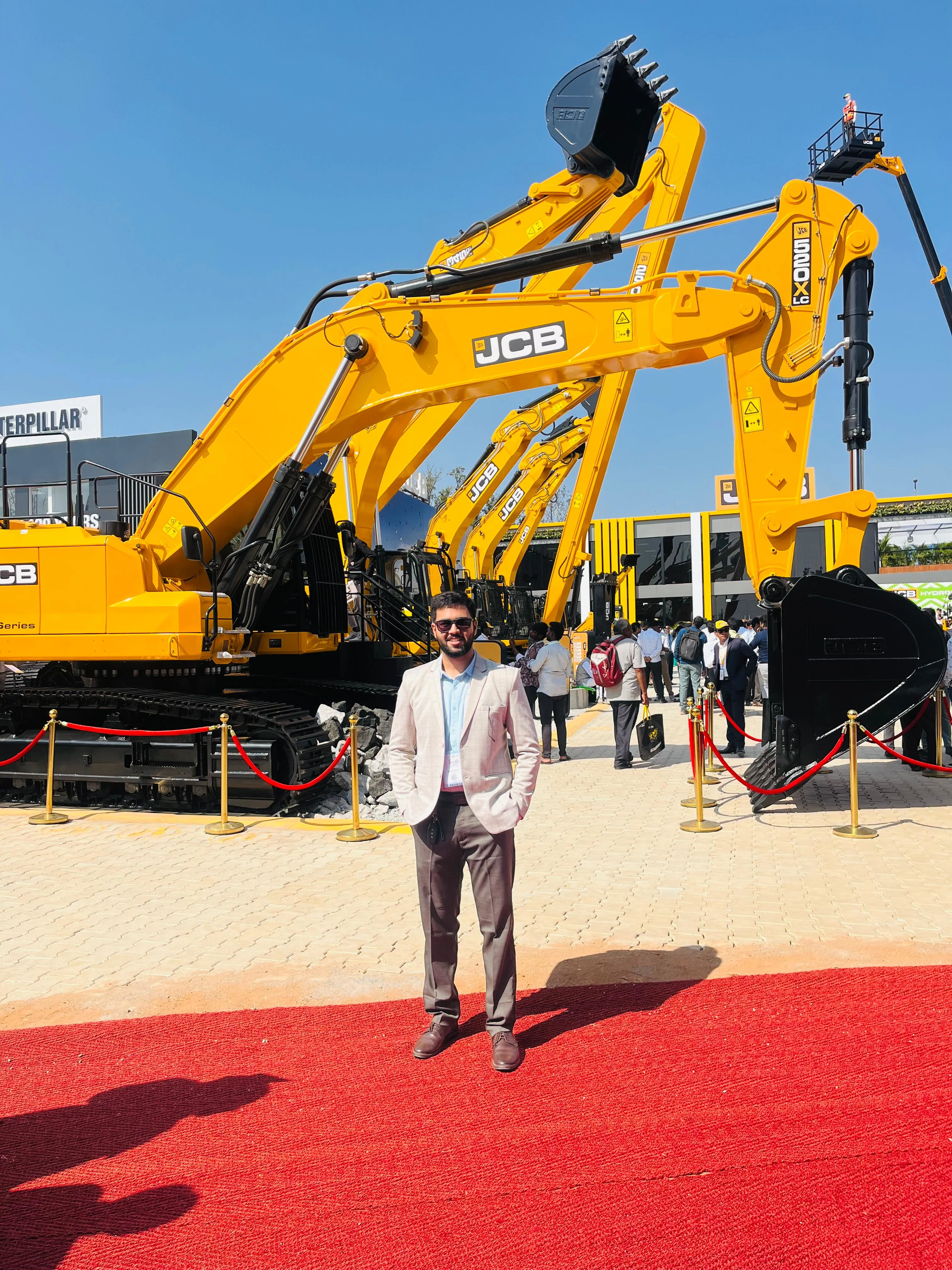
Prakhar Bhardwaj founded BOS with a modern approach to on-site machining and bore repair solutions. With 6+ years of hands-on field experience, he leads BOS's product development and customer operations across India and international markets.