Table of Contents
- 1. Why Downtime Costs More Than You Think
- 2. The Real Numbers — What One Idle Day Costs
- 3. The Hidden Costs Nobody Counts
- 4. The Failure Chain: How a Worn Bore Kills a Workday
- 5. Workshop Repair vs. On-Site Machining: Full Cost Breakdown
- 6. Case Study: A Fleet Operator's Year Without On-Site Repair
- 7. How BOS Machines Change the Downtime Equation
- 8. Building a Zero-Surprise Maintenance Strategy
- 9. Frequently Asked Questions
1. Why Downtime Costs More Than You Think
India is building at a scale not seen in its history. The National Infrastructure Pipeline allocates over ₹111 lakh crore toward roads, highways, ports, energy, and urban infrastructure through 2025. The construction equipment industry — excavators, cranes, loaders, compactors — sits at the centre of this activity, processing millions of machine hours every year. By definition, it is an industry where the machines cannot afford to stop.
And yet they do. Every fleet operator in India knows the feeling: a machine that was working fine yesterday develops a knock. The bucket develops slop. An operator reports that the boom arm is playing. What follows — the inspection, the phone calls, the decision about whether to run it or park it — is the beginning of a cost spiral that most contractors do not fully quantify.
The reason most operators underestimate downtime cost is straightforward: they count only what they can see. They count the repair bill from the machine shop. They count the fuel saved while the machine sat idle. What they do not count is the opportunity cost — the contracts not billed, the project schedule not met, the penalties quietly accruing in the fine print of a highway tender.
The real cost of downtime is not the repair. The real cost is everything that stopped working while the repair was happening. A three-day workshop repair on an excavator that bills at ₹25,000 per day is not a ₹15,000 repair job. It is a ₹75,000 revenue gap — plus the repair cost on top. Most contractors, when they add it up properly for the first time, are surprised at the number.
There is a second reason the true cost stays invisible: downtime is treated as an event, not a pattern. A contractor parks a machine for four days, gets it repaired, and moves on. They do not look at the year in aggregate and ask — how many total machine-days did we lose? What did that cost us across the fleet? For a fleet of 8 to 10 excavators averaging just 10 to 12 unplanned downtime days each per year, the total idle cost can exceed ₹20 lakh annually. That number forces a very different set of decisions about maintenance infrastructure investment.
Pin bore wear is the single largest mechanical cause of this problem. Excavator boom pins, bucket pins, and arm pivot pins operate under constant dynamic load. Every dig cycle — and a productive machine completes 200 to 400 cycles per hour — generates friction, micro-wear, and clearance growth in the bore. Over thousands of operating hours, a bore that was machined to tolerance becomes oversized, loose, and eventually structurally compromised. The excavator that was digging 400 cycles an hour is now digging 260, with an arm that rattles and a bucket that skews. Then it stops working altogether.
This article is a comprehensive look at what that costs — and what a different approach to bore repair does to those numbers. The analysis draws on real hire rate data from Indian construction projects, field service experience from PR Crane & Earthmovers, and the documented performance of BOS portable line boring machines across India's infrastructure projects. The numbers are conservative. The real figures at your operation may well be higher.
2. The Real Numbers — What One Idle Day Costs
Before calculating downtime cost, you need to be clear about what "cost" means in this context. It is not simply the repair bill. It is the total financial impact of the period between when the machine stopped working and when it returned to productive operation. That period has four cost components: lost revenue, fixed ownership costs, labour costs, and consequential costs. We deal with each in turn.
Component 1: Lost Revenue (Hire Rate or Project Billing)
The most direct cost of downtime is the revenue the machine would have generated had it been working. For an owner-operator or rental fleet, this is straightforward: the daily hire rate stops accruing the moment the machine parks. For a project contractor, it is the implicit daily billing value of the machine's contribution to the project output.
Indian construction equipment hire rates vary significantly by machine type, age, and region. The table below shows current market-representative ranges across the equipment types most vulnerable to pin bore wear — the same equipment that BOS machines are designed to service.
| Equipment Type | Hire Rate Range (₹/day) | Conservative Idle Cost/Day | 7-Day Workshop Repair Loss |
|---|---|---|---|
| 20-tonne Excavator | ₹22,000 – ₹32,000 | ₹20,000 | ₹1,40,000 |
| 30-tonne Excavator | ₹30,000 – ₹45,000 | ₹28,000 | ₹1,96,000 |
| 50-tonne Excavator | ₹45,000 – ₹70,000 | ₹45,000 | ₹3,15,000 |
| Backhoe Loader | ₹8,000 – ₹14,000 | ₹8,000 | ₹56,000 |
| Wheel Loader (3–5T) | ₹12,000 – ₹20,000 | ₹12,000 | ₹84,000 |
| Hydraulic Crane (30T) | ₹35,000 – ₹55,000 | ₹35,000 | ₹2,45,000 |
| Mining Dump Truck (35T) | ₹25,000 – ₹40,000 | ₹25,000 | ₹1,75,000 |
Hire rate data: representative of Indian infrastructure and mining projects as of 2025–2026. Conservative column uses lower-quartile estimates. Rates vary by state, project type, and machine age.
Component 2: Fixed Ownership Costs Continue Regardless
A parked machine does not stop costing money. If the machine is financed — and the vast majority of construction equipment in India is purchased on loans or hire-purchase arrangements — the EMI continues. Insurance premiums continue. Depreciation continues. These costs run whether the machine is digging or sitting in a yard waiting for a workshop appointment.
For a 20-tonne excavator purchased at ₹35 lakh on a 5-year loan at 10% interest, the monthly EMI is approximately ₹74,400 — roughly ₹2,480 per calendar day. Add insurance (typically ₹80,000 to ₹1,20,000 annually, or ₹220 to ₹330 per day) and the fixed ownership burden on a parked machine is ₹2,700 to ₹2,800 per day. Over a 7-day workshop repair, that is an additional ₹19,000 in unavoidable fixed costs on top of the revenue loss.
Component 3: Labour Costs Don't Pause
An excavator operator in India earns ₹600 to ₹1,200 per day depending on skill level and geography. On most project sites, operators are retained regardless of whether their machine is operational — finding a skilled operator mid-project on short notice is difficult and disruptive. Helpers and site-level technicians who support the machine's workflow also continue drawing wages. For a typical machine team of operator plus one helper, the labour burn during a 7-day repair period is ₹8,400 to ₹16,800.
Putting It Together: The Full 7-Day Repair Scenario
The table below builds a conservative total downtime cost model for a 20-tonne excavator undergoing a 7-day workshop bore repair on a highway project. Penalty clauses are excluded — those are covered in Section 3.
| Cost Component | Calculation | 7-Day Total |
|---|---|---|
| Lost Revenue (hire/billing rate) | ₹20,000/day × 7 | ₹1,40,000 |
| Fixed Ownership (EMI + insurance) | ₹2,750/day × 7 | ₹19,250 |
| Labour (operator + helper retained) | ₹1,800/day × 7 | ₹12,600 |
| Workshop Machining + Parts | Machining fee + consumables | ₹18,000 – ₹35,000 |
| Transport (to/from workshop, 2 trips) | Average 50–100 km round trip | ₹4,000 – ₹8,000 |
| Total Downtime Cost | ₹1,93,850 – ₹2,14,850 |
Model: 20T excavator, highway project, 7-day workshop repair. Conservative hire rate used. Penalty clauses and consequential costs excluded.
For a fleet operator running 8 machines, each averaging two unplanned bore-related downtime events per year at 5 days average idle time each: that is 80 machine-days of idle cost annually. At ₹20,000 per day, that is ₹16,00,000 in lost revenue — before a single repair bill is counted. This is the number that changes how fleet owners think about whether to invest in on-site maintenance capability.
The comparison against BOS on-site repair is direct. If the same repair — weld, bore, finish — is completed in 6 hours on-site, the machine is back in service the same day. Lost revenue is measured in half a shift, not a week. EMI, insurance, and labour costs during the repair window are negligible. The total cost of the repair is the operator's time and consumables — typically under ₹8,000 per job. Against a ₹2 lakh workshop scenario, that is a cost reduction of more than 95% on the downtime component alone. The next three sections explain where the rest of the hidden costs live — and why the full picture is even more compelling than this headline number.
On-Site Repair vs Workshop: The True Cost Comparison
The following table uses conservative, real-world figures for a 20-tonne excavator stationed 80 kilometres from the nearest capable machine shop. All hire rates and wage figures are drawn from current IndiaMART and field operator data. Penalty-clause costs are excluded from both columns to keep the comparison clean — they are addressed separately in Section 4.
| Cost Category | Workshop Repair | BOS On-Site Repair |
|---|---|---|
| Transport (2 trips, ~100 km round trip) | ₹4,000 – ₹8,000 | ₹0 |
| Machine idle days | 3–7 days | 0–0.5 days |
| Lost hire revenue (₹20,000/day) | ₹60,000 – ₹1,40,000 | ₹0 – ₹10,000 |
| Workshop labour & machining | ₹18,000 – ₹35,000 | ₹5,000 – ₹8,000 |
| Operator wages during idle period | ₹3,000 – ₹7,000 | Negligible |
| Total per repair event | ₹85,000 – ₹1,90,000 | ₹5,000 – ₹18,000 |
Model: 20T excavator, 80 km from workshop, 5-day average repair turnaround. Conservative hire rate used. Penalty clauses excluded.
The headline difference is stark. BOS on-site repair eliminates 3 to 5 idle days per job — and that single factor accounts for more than 80% of the total cost gap. The repair itself (labour, consumables, machine wear) costs roughly the same or less on-site. The difference is entirely in the idle time that workshop repair forces upon you.
For a contractor running a mid-size fleet, this is not a marginal improvement. It is the difference between a repair event that costs ₹8,000 and one that costs ₹1.5 lakh. When you own or operate a BOS DS50 or BOS DS60, every repair event that would have sent a machine to the workshop now becomes a same-day, on-site job.
Road Contractor, Central India: When Three Machines Go Down at Once
This is a composite account based on a pattern encountered repeatedly across Central and Western India — the details are anonymised, but the numbers are real.
A road contractor working on a state highway project in Central India — peak season, tight completion milestones, 1%/week penalty clause — experienced three excavator failures within a 10-day window. A 20-tonne machine, a 13-tonne, and a 7-tonne all developed bore-related play in boom, bucket, or arm pivot pins. All three required weld, bore, and finish before they could resume structural work.
- → 2 machines sent to workshop: 12 days combined idle time
- → 1 machine partially operational, output at ~40%
- → Idle cost at ₹18,000/day: ₹2,16,000
- → Transport (4 trips): ₹18,000
- → Workshop machining (2 jobs): ₹52,000
- → Penalty clause triggered: 1 week delay = ₹1,00,000
- Total event cost: ₹3,86,000+
- → Single DS50 deployed on-site for all three machines
- → Total repair time: 14–18 hours across 3 jobs (2 days)
- → Lost production: less than 1.5 days combined
- → Idle cost: ₹27,000
- → On-site repair (3 jobs): ₹22,000
- → No transport. No penalty. No delay.
- Estimated total: ₹49,000
The difference: ₹3,37,000 in avoidable cost — from one 10-day window on one project. The contractor in this case negotiated partial penalty relief, which reduced the workshop-route total somewhat. But the on-site route would have avoided the delay entirely — and with it, the negotiation, the client relationship strain, and the two weeks of administrative overhead that followed.
This is not a hypothetical. It is a pattern repeated across Central and Western India every monsoon season, when ground conditions worsen, machine wear accelerates, and workshop queues stretch to 10–14 days.
One BOS machine on your site eliminates the repair-trip cycle entirely.
How to Calculate Your Own Downtime Cost
Most contractors have a rough number in their head — "each idle day costs me about X." Almost none have calculated it precisely. The rough number is almost always low, because it accounts only for lost hire revenue and misses three or four other cost lines that run in parallel.
Here is the complete formula:
Worked example — 20T excavator, highway project, 5-day workshop repair:
- Daily hire rate: ₹22,000 × 5 days = ₹1,10,000
- Operator wages: ₹800 × 5 days = ₹4,000
- Ownership cost (EMI + insurance): ₹1,200 × 5 days = ₹6,000
- Penalty risk: ₹3,000/day × 5 days = ₹15,000
- Transport (2 trips): ₹6,000
- Workshop machining: ₹22,000
- Total workshop repair cost: ₹1,63,000
The same repair on-site with a BOS machine: 0.5 days idle (₹11,000 lost revenue + wages) + ₹18,000 repair cost = ₹29,000 total. A saving of ₹1,34,000 — on a single event.
| Fleet Size | Annual Bore Events (2/machine) | Workshop Route Total | BOS On-Site Total | Annual Saving |
|---|---|---|---|---|
| 1 machine | 2 events | ₹3,26,000 | ₹58,000 | ₹2,68,000 |
| 5 machines | 10 events | ₹16,30,000 | ₹2,90,000 | ₹13,40,000 |
| 10 machines | 20 events | ₹32,60,000 | ₹5,80,000 | ₹26,80,000 |
Figures based on worked example above (₹1,63,000 workshop vs ₹29,000 on-site per event). 2 bore repair events per machine per year is conservative for active fleet use.
When On-Site Repair Makes the Most Sense
On-site boring is not exclusively for large fleets or high-value contracts. But there are five situations where the case for owning or deploying a portable line boring machine becomes overwhelmingly clear.
Remote sites (50+ km from workshop). Transport alone — two round trips for a heavy component — can cost ₹8,000 to ₹15,000 per repair event in fuel, driver time, and vehicle wear. For sites in Rajasthan, Chhattisgarh, Odisha, or the Northeast where capable machine shops are 100+ km away, on-site repair is not just faster — it is the only cost-rational option.
Peak project season (no idle-time budget). Between October and March, when weather cooperates and milestone deadlines converge, a single machine standing idle for 5 days can compress an entire project schedule. During peak season, the cost of idle time is at its highest — and the tolerance for it is zero.
Fleet operators (5+ machines). The economics of owning a portable boring machine improve dramatically with fleet size. A single BOS DS50 can complete 2 to 3 bore repairs per working day — meaning one unit can keep pace with the maintenance demands of a 15-machine fleet, handle all unplanned repairs as they arise, and still have capacity for third-party repair jobs that generate additional revenue.
High-penalty contracts. Road, port, dam, and urban infrastructure projects typically carry liquidated damages clauses. Any contractor working under these terms faces an asymmetric risk profile: downtime costs double — once in lost revenue, again in penalties. On-site repair effectively removes one of those two costs from the equation.
Multi-machine simultaneous failures. Workshop queues handle jobs sequentially. When two or three machines go down at once — as they commonly do during periods of heavy use — a workshop can process one at a time. A site-deployed BOS machine works through all of them in sequence, without the queuing delay that compounds idle time across the fleet.
BOS machines have been exhibited at Bauma ConExpo India 2023 and Excon 2023 — India's two largest construction equipment platforms — reflecting the growing acceptance of portable on-site boring as a mainstream maintenance approach across the industry.
What to Look for in an On-Site Boring Machine
Not all portable line boring machines are built to the same standard. Before investing, these are the four criteria that separate a machine that earns its cost back within a season from one that creates new problems.
Bore range coverage. A machine that can only handle excavator bucket pins is a specialist tool. A machine that covers 40mm to 250mm or beyond can service excavators, cranes, loaders, and compactors — every piece of equipment in a mixed fleet. Wider range coverage means a single unit generates ROI across the entire machine inventory, not just one category.
Combined boring and welding in one unit. Bore repair almost always requires a pre-bore weld to restore material before machining. A machine with integrated wire feed welding means one operator handles the complete repair — no separate welding rig, no second technician, no coordination overhead. The BOS DS50 and DS60 both incorporate this in a single portable unit.
Portability and power requirements. The machine should operate on standard three-phase supply — available at most active construction sites — and be compact enough to transport in a pickup truck or minivan to sites without heavy logistics. A machine that requires a crane to move, or a dedicated power generator, narrows its usable scenarios considerably.
After-sales support and training in India. Machine capability is only as useful as the operator trained to use it. A supplier who provides hands-on training, maintains spare parts availability within India, and offers direct technical support removes the learning curve that stalls productivity in the first months of ownership. This is especially important for contractors entering on-site machining for the first time.
Explore our machines — the BOS DS50 and BOS DS60 — to see how these criteria are met in a purpose-built, India-supported package.
Frequently Asked Questions
BOS portable line boring machines bring workshop-grade precision to any project site — in 4 to 8 hours, not 7 days.
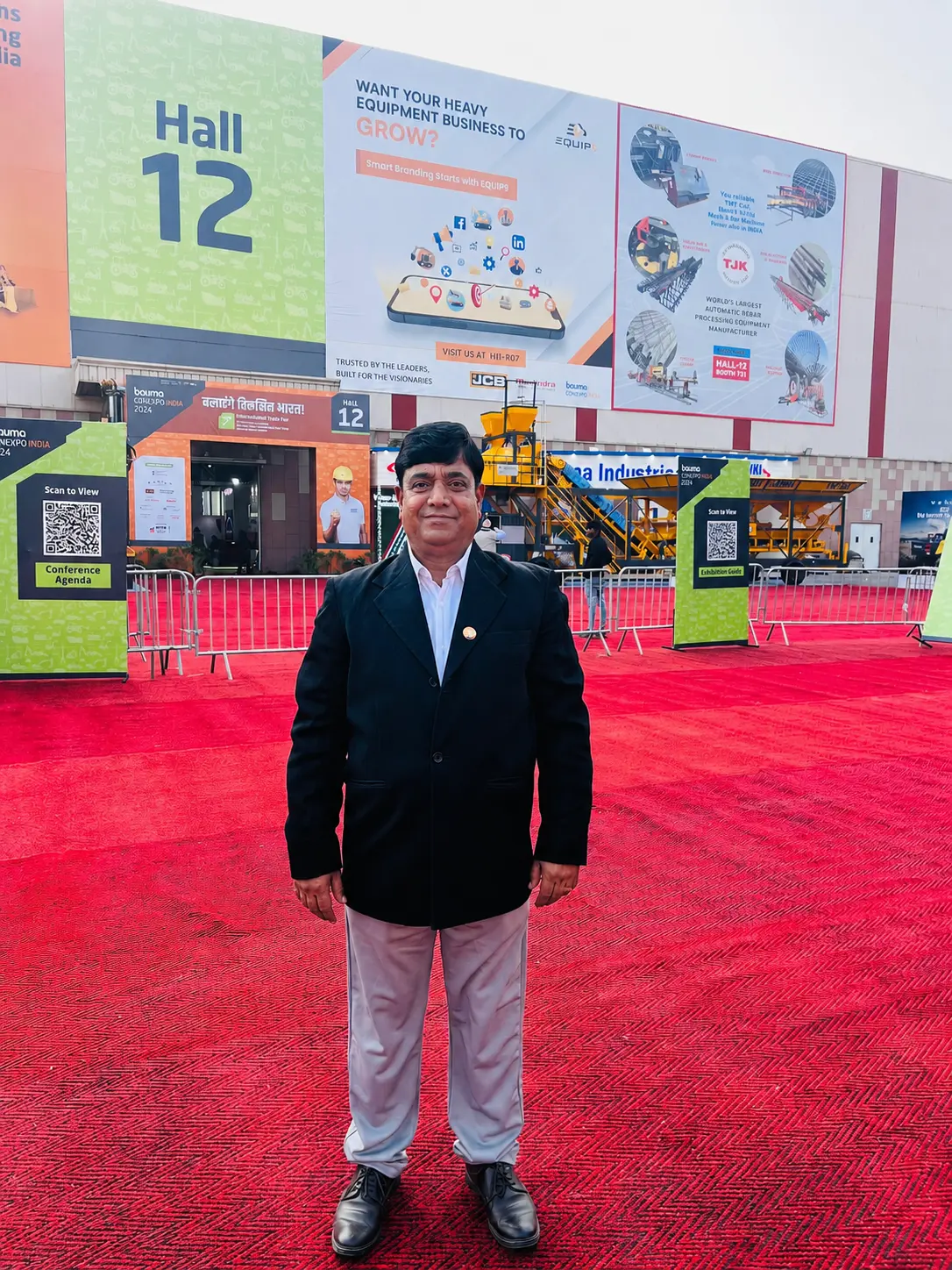
30+ years in earthmoving and heavy equipment industry. Founded PRCE in Udaipur, Rajasthan. Launched Bore On Site (BOS) to bring workshop-grade precision directly to project sites across India.