Table of Contents
- 1. Introduction
- 2. Master Bore Dimension Reference — 20 Models
- 3. Why Excavator Pin Bores Wear Faster in India
- 4. Common Bore Wear Patterns by Brand
- 5. JCB — 3DX, JS205, JS220, JS300
- 6. Tata Hitachi ZAXIS — 80 to 370
- 7. Komatsu PC — PC200 to PC800 Mining
- 8. SANY — SY215 and SY365
- 9. Volvo EC — EC210 and EC300
- 10. BOS DS50 and DS60 Specifications
- 11. On-Site Bore Repair Process — Step by Step
- 12. Frequently Asked Questions
- 13. References
1. Introduction
India operates the world's third-largest fleet of hydraulic excavators — over 1,40,000 machines as of 2025, spread across Bharatmala highway projects, urban metro construction, coal and iron-ore mines, and real-estate development. JCB, Tata Hitachi, Komatsu, SANY and Volvo together account for nearly 85% of this fleet.
Every one of these machines carries 8–14 pin bores in the boom, arm and bucket linkage. A worn bore — even 0.3 mm oversized — allows pin play that accelerates bushing wear, increases fuel burn and, on excavators working near Bharatmala penalty clauses, triggers daily equipment downtimes that cost ₹40,000–₹1,20,000 per shift.
BOS (Bore On Site) mobilises DS50 and DS60 line boring machines directly to the worksite and restores each bore to OEM H7 tolerance (±0.05 mm, Ra 3.2 µm surface finish) — eliminating the need to transport a 20-tonne machine to a workshop. This guide gives model-specific bore dimensions, wear patterns and repair decisions for India's five dominant excavator brands.
2. Master Excavator Pin Bore Dimension Reference — India Fleet
| Brand | Model | Class | Bucket Pin (mm) | Boom–Arm Pivot (mm) | Arm–Bucket Pivot (mm) | BOS Machine |
|---|---|---|---|---|---|---|
| JCB | 3DX Backhoe | ~1.5t arm | 55–65 | 70–80 | 55–65 | DS50 |
| JCB | JS205 LC | 20t | 75–85 | 90–100 | 75–85 | DS50 |
| JCB | JS220 LC | 22t | 78–88 | 95–105 | 78–88 | DS50 |
| JCB | JS300 LC | 30t | 95–110 | 110–125 | 90–105 | DS60 |
| Tata Hitachi | ZAXIS 80 | 8t | 45–55 | 60–70 | 45–55 | DS50 |
| Tata Hitachi | ZAXIS 140 | 14t | 60–70 | 75–85 | 60–70 | DS50 |
| Tata Hitachi | ZAXIS 200 | 20t | 75–85 | 90–105 | 75–85 | DS50 |
| Tata Hitachi | ZAXIS 370 | 37t | 100–120 | 120–140 | 100–115 | DS60 |
| Komatsu | PC200-8 | 20t | 75–85 | 90–100 | 75–85 | DS50 |
| Komatsu | PC300-8 | 30t | 90–105 | 110–125 | 90–105 | DS60 |
| Komatsu | PC400-8 | 40t | 110–130 | 130–150 | 110–125 | DS60 |
| Komatsu | PC800-8 (Mining) | 80t | 180–220 | 220–260 | 170–200 | DS60 |
| SANY | SY215C | 21t | 75–88 | 90–105 | 75–88 | DS50 |
| SANY | SY365H | 36t | 105–125 | 125–145 | 105–120 | DS60 |
| SANY | SY500H | 50t | 140–160 | 160–185 | 135–155 | DS60 |
| Volvo | EC210B | 21t | 78–90 | 95–110 | 78–90 | DS50 |
| Volvo | EC300D | 30t | 95–110 | 115–130 | 95–110 | DS60 |
| CAT | 320D/GC | 20t | 78–88 | 90–105 | 78–88 | DS50 |
| CAT | 336D/336 GC | 36t | 105–120 | 125–145 | 105–120 | DS60 |
| L&T Komatsu | PC210-10M0 | 21t | 78–88 | 95–108 | 78–88 | DS50 |
Table 1 — Master Excavator Pin Bore Dimension Reference. Source: OEM service manuals, BOS field measurements. All values are nominal bore diameters; actual wear limit per OEM manual.
3. Why Excavator Pin Bores Wear Faster in India
Vindhya and Deccan basalt rock, laterite in Odisha/Jharkhand and quartzite in Rajasthan produce silica-rich dust that bypasses seals and acts as a lapping compound inside pin bores. Wear rates of 0.1–0.3 mm per 500 operating hours are common.
Bharatmala penalty clauses (₹1–3 lakh/day for delays) push contractors to run machines 16–20 hours/day. Pin lubrication intervals designed for 8-hour shifts go unmet, leading to metal-to-metal contact.
Excavators used for crane lifts or rock-breaker attachments often exceed design bucket pin loads by 30–50%, accelerating bore ovality.
June–September monsoon in central India drives water and clay slurry through worn lip seals, causing corrosive wear and pitting in boom-arm pivot bores.
4. Common Bore Wear Patterns by Brand
| Brand / Model | Wear Location | Wear Pattern | Damage (mm) | BOS Repair |
|---|---|---|---|---|
| JCB 3DX | Bucket pin bore | Oval wear, vertical axis | 0.5–1.5 | Weld + bore to OEM |
| JCB JS205/220 | Arm–bucket pivot | Bell-mouth at pin entry | 0.8–2.0 | Full inner-circle weld |
| JCB JS300 | Boom foot (main pivot) | Concentric + scoring | 1.0–3.0 | Sector weld + bore |
| Tata Hitachi ZAXIS 200 | Arm–bucket pivot | Oval + corrosion pitting | 0.5–1.8 | Weld + hone |
| Tata Hitachi ZAXIS 370 | Boom–arm pivot | Uniform + bushing spin | 1.0–2.5 | Sleeve + bore |
| Komatsu PC200 | Arm–bucket pivot | Bell-mouth | 0.8–2.0 | Weld + bore |
| Komatsu PC300/400 | Boom foot | Heavy concentric wear | 1.5–4.0 | Sector weld + bore |
| Komatsu PC800 | All pivots — extreme load | Eccentric + oval | 2.0–6.0 | Full inner weld + bore |
| SANY SY215 | Arm–bucket pivot | Oval wear (soft steel) | 1.0–2.5 | Weld + bore + hone |
| SANY SY365 | Boom–arm pivot | Bell-mouth + scoring | 1.5–3.5 | DS60 full weld |
| Volvo EC210 | Bucket link bore | Lateral wear | 0.5–1.5 | Sector weld + bore |
| Volvo EC300 | Boom foot | Concentric + rust pitting | 1.0–3.0 | Full inner weld |
Table 2 — Common bore wear patterns across India's excavator fleet. For bore welding details, see the complete guide.
5. JCB Excavator Bore Repair — 3DX, JS205, JS220, JS300
JCB holds the largest excavator market share in India (~28%) and dominates urban infrastructure and road-widening projects. The 3DX backhoe is the country's most-sold construction machine; the JS200 series leads the 20-tonne hydraulic excavator segment.
3DX Backhoe — Bucket Pin and Dipper Stick Bore
The 3DX dipper stick pivot bore (55–65 mm) and bucket pin bore (55–65 mm) are the most-repaired bores in India due to continuous rock-bucket swaps. Wear beyond 1.5 mm causes visible pin slap — a metallic knock on crowd. BOS restores using DS50 (range 55–160 mm): inner-circle weld to build up the bore, then precision boring to 62 mm H7 tolerance.
JS205 / JS220 — Arm–Bucket Pivot
The JS205/220 arm-bucket pivot (75–88 mm) develops bell-mouth wear from side-loading during slope trimming and canal excavation — common on Jal Jeevan Mission pipeline projects. Symptom: bucket curl force drops by 15–20%. BOS repair: sector welding the high-wear zone, boring to 82 mm H7, surface finish Ra 3.2.
JS300 — Boom Foot (Main Pivot)
The JS300 boom foot bore (95–110 mm) carries the full structural load of the 30-tonne machine. Wear presents as a 5–10 mm vertical boom drop under full crowd. This is a DS60 job (range 65–600 mm). Full inner-circle weld rebuilds the bore wall, followed by precision boring to 102 mm H7. On-site repair time: 10–14 hours vs. 10–15 days workshop downtime.
6. Tata Hitachi ZAXIS Bore Repair — 80 to 370
Tata Hitachi manufactures ZAXIS excavators at Kharagpur, West Bengal, and holds ~18% of India's market. The ZAXIS 200 is the workhorse on Odisha and Jharkhand mining roads; the ZAXIS 370 dominates large earthworks.
ZAXIS 80 / 140 — Mini Excavator Bores
ZAXIS 80 bores (45–55 mm) and ZAXIS 140 bores (60–70 mm) are most often damaged by operators using mini excavators for jobs requiring a 20-tonne machine. DS50 handles both. Repair: clean bore, measure ovality with dial bore gauge, sector weld only the worn sector (typically bottom 120°), bore to OEM nominal +0/+0.03 mm.
ZAXIS 200 — Arm–Bucket Pivot (75–85 mm)
The highest-volume Tata Hitachi repair for BOS. The arm-bucket pivot develops corrosive pitting from monsoon mud ingress — characteristic of the Hitachi seal design in early ZAXIS models. BOS procedure: sandblast pitted surface, apply Cr-Mo weld overlay, bore to 82 mm H7, install new OEM pin and bushing by contractor.
ZAXIS 370 — Boom–Arm Pivot (100–120 mm)
ZAXIS 370 boom-arm pivots on Jharkhand coal haul roads typically wear to 3–5 mm oversize within 4,000 operating hours. BOS often uses a pre-machined sleeve solution: bore the worn housing to 130 mm, press-fit a Cr steel sleeve, then finish-bore the sleeve ID to the OEM 110 mm H7. This eliminates welding in structurally critical cast-steel boom sections.
7. Komatsu PC Bore Repair — PC200 to PC800 Mining
Komatsu holds ~14% of India's market and dominates heavy mining — PC400 and PC800 machines are the backbone of coal overburden stripping in Singareni, SECL and MCL coalfields. Pin bore repair on Komatsu mining excavators is among the most technically demanding on-site machining jobs in India.
PC200-8 — Standard 20-Tonne Class (75–85 mm)
PC200 bore repair follows the same procedure as JS220 and ZAXIS 200. Komatsu machines are known for harder pin steel — the bore lasts slightly longer but pins wear more. BOS: check housing hardness (should be <HRC 30 for safe welding), sector weld, bore to 82 mm H7.
PC300 / PC400 — Heavy Construction (90–130 mm)
Dominant tools on NHAI four-laning projects and large irrigation canal works. Boom foot bores (110–130 mm on PC400) carry enormous cyclic loads. DS60 range covers 65–600 mm. Full inner-circle weld buildup is the standard technique — sector welding is insufficient for >2.5 mm wear in structural boom castings.
PC800-8 Mining — Large Bore Specialist Job (180–260 mm)
The Komatsu PC800 (80-tonne) is India's most powerful hydraulic excavator in widespread use. Boom foot bores run 220–260 mm and the DS60 (65–600 mm range) is the only practical on-site boring solution. Downtime cost is ₹1,20,000–₹2,00,000 per day at coal mine lease rates — making on-site repair (24–36 hours) far more economical than a workshop move (12–20 days). BOS has executed PC800 bore jobs in Singareni (Telangana) and SECL (Chhattisgarh).
8. SANY Bore Repair — SY215 and SY365
SANY has captured ~12% of India's market since 2018, primarily through aggressive pricing on the SY215 and SY365. SANY machines are prevalent on PMGSY rural road projects and real-estate groundwork in Tier-2 cities.
SY215C — Arm–Bucket Pivot and Bucket Link (75–88 mm)
SY215 bucket-side bores wear faster than JCB or Komatsu equivalents because early models used softer (mild steel) bore inserts that were not case-hardened. 2023-onwards models have addressed this, but a large installed base of pre-2023 machines shows accelerated wear at 2,000–3,000 hours. BOS: sector weld + bore to OEM 82 mm H7. Post-repair hardness check ensures the rebuilt bore matches ≥HRC 25.
SY365H — Boom–Arm Pivot (105–125 mm)
Popular on large civil projects — notably Delhi–Mumbai Expressway earthworks. At 36 tonnes, the boom-arm pivot (105–125 mm) is a DS60 job. BOS experience shows heavy scoring consistent with under-lubricated pins on 2-shift operation. Repair: clean scoring with carbide insert boring pass, apply Cr-Mo weld overlay on scored sector, finish-bore to 115 mm H7.
9. Volvo EC Bore Repair — EC210 and EC300
Volvo holds ~8% of India's market, concentrated in the premium infrastructure segment — airport projects, port construction and large metro works. Volvo machines are known for structural integrity and high-quality castings, but pin bore wear still occurs under Indian operating conditions.
EC210B — Bucket Link and Tilt Pivot (78–90 mm)
EC210 bucket link bore develops lateral wear from side-cutting on canal batters and drainage trenches. The Volvo casting steel is harder than SANY but comparable to Komatsu — preheat to 150°C before welding is essential to prevent heat-affected zone cracking. BOS: bore to 85 mm H7, Ra 3.2 surface finish.
EC300D — Boom Foot (95–110 mm)
EC300 boom foot bores on India's port construction sites are exposed to salt-air corrosion in addition to mechanical wear. BOS procedure: rust-removal blast, bore measurement, inner-circle weld buildup, boring to 105 mm H7 and zinc-phosphate coating on the external bore surface before pin reinstallation.
10. BOS Line Boring Machines — DS50 and DS60
| Specification | DS50 | DS60 |
|---|---|---|
| Bore Range | 55–160 mm | 65–600 mm |
| Power | 3-phase 415V / petrol generator | 3-phase 415V / petrol generator |
| Feed Rate | 0.05–0.5 mm/rev | 0.05–0.5 mm/rev |
| Tolerances | ±0.05 mm, Ra 3.2 µm | ±0.05 mm, Ra 3.2 µm |
| Deployment | On-site, any orientation | On-site, any orientation |
| Best For | JCB JS205/220, PC200, SY215, EC210, ZAXIS 200 | JCB JS300, PC300/400/800, SY365, EC300, ZAXIS 370 |
| Price (INR) | ₹3,25,000 | ₹5,75,000 |
For a detailed comparison, see DS50 vs DS60. For pricing details, see the cost guide.
11. On-Site Bore Repair Process — Step by Step
BOS engineer inspects boom, arm and bucket bores using dial bore gauges. Ovality, taper and surface condition are recorded. Machine and bore orientation assessed for DS50/DS60 setup.
The boring bar is aligned to the bore axis using precision alignment targets. Bore bar runout is checked and corrected to <0.02 mm before cutting begins.
MIG or TIG welding rebuilds worn material. Inner-circle welding for uniform wear; sector welding for localised bell-mouth or oval wear. Interpass temperature maintained at 150–200°C to control distortion.
Carbide insert removes weld high spots and restores concentricity. Cuts are taken in 0.3–0.5 mm depth increments.
Final boring pass to OEM nominal diameter. Surface finish measured with profilometer — Ra 3.2 µm target. Diameter verified with dial bore gauge at three cross-sections.
BOS issues a bore repair certificate with pre- and post-repair measurements, weld procedure used and final tolerance achieved. Required for NHAI warranty compliance and fleet insurance claims.
12. Frequently Asked Questions
13. References
1. JCB India — JS220 LC Hydraulic Excavator Operation and Maintenance Manual (Ballabgarh, 2022).
2. Tata Hitachi — ZAXIS 200 Series Service Manual (Kharagpur, 2021).
3. Komatsu Ltd — PC200-8 Shop Manual SEN00208-17 (Tokyo, 2022).
4. SANY Heavy Industry — SY215C Hydraulic Excavator Maintenance Manual (Changsha, 2023).
5. Volvo CE — EC210B Service and Repair Manual (Eskilstuna, 2021).
6. Bureau of Indian Standards — IS 2825:1969, Code for Unfired Pressure Vessels (welding procedures).
7. NHAI — Bharatmala Pariyojana Phase-I Status Report (Ministry of Road Transport, 2025).
8. Equipment India Magazine — India Excavator Market Review 2024–25 (Mumbai, 2025).
9. CII–KPMG — Indian Construction Equipment Industry Outlook 2025 (New Delhi, 2024).
10. BOS — Bore On Site Field Service Records: Singareni, SECL, NHAI sites, 2022–2025.
BOS mobilises DS50 and DS60 machines directly to your site — JCB, Tata Hitachi, Komatsu, SANY, Volvo or any other brand. H7 tolerance, 24-hour turnaround.
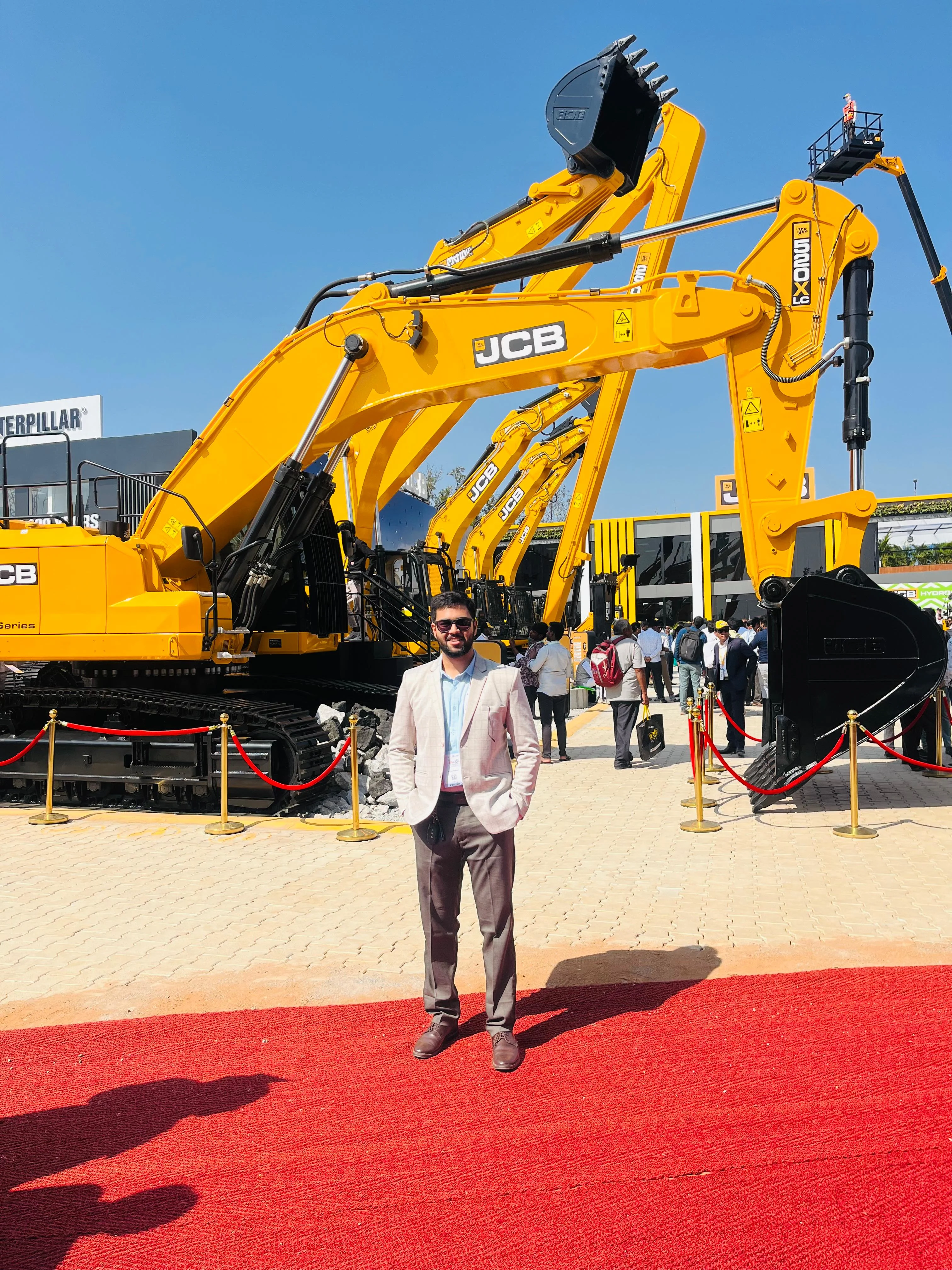
Prakhar Bhardwaj is a mechanical engineer with 11 years of field experience in heavy construction and mining equipment maintenance. He has supervised over 400 on-site bore repair jobs across Rajasthan, Jharkhand, Odisha and Tamil Nadu, covering excavators, road machinery and mining draglines.
wearebos.in